Home Blog Page 17

Launcelot`s Tourney part 2

0

For Sir Gawaine was a passing hot knight of nature; and this Sir Pinell hated Sir Gawaine, because of his kinsman. Sir Lamoracke de Galis: and, therefore, for pure envy and hate, Sir Pinell poisoned certain apples for to poison Sir Gawaine withal. And so this was well unto the end of the meat; and so it befell, by misfortune, that a good knight, named Sir Patrice, cousin unto Sir Mador de la Port, took one of the poisoned apples: and, when he had eaten it, he swelled till he burst; and there Sir Patrice fell down dead suddenly among them.Then every knight leaped from .the board, ashamed, and enraged for wrath nigh out of their wits; for they wist not what to say, considering that Queen Guenever made the feast and dinner, they all had suspicion upon her. “My lady, the Queen,” said Sir Gawaine* “wit ye well, madam, that this dinner was made for me: for all folks, that know my conditions, understand well that I love fruit; and now I see well I had been near slain: therefore, madam, I dread me least ye will be shamed.”

Queen Guenever

Then the Queen stood still, and was right sore abashed, that she wist not what to say. “This shall not be ended so,” said Sir Mador de la Port; “for here have I lost a full noble knight of my blood: and, therefore, upon this shame and despite I will be revenged to the uttermost.” And thereupon Sir Mador appealed Queen Guenever of the death of his cousin, Sir Patrice. Then stood they all still, that none of them would speak a word against him; for they had a great suspection unto Queen Guenever, because she let make the dinner. And the Queen was so sore abashed, that she could none otherwise do, but wept so heartily, that she fell in a swoon. With this noise and sudden cry came unto them King Arthur, and marveled greatly what it might be; and, when he wist of their trouble, and the sudden death of that good knight, Sir Patrice, he was a passing heavy man.And ever Sir Mador stood still before King Arthur, and ever he appealed Queen Guenever of treason. For the custom was such at that time, that all manner of shameful death was called treason. Fair lords,” said King Arthur, “me repenteth sore of this trouble, but the cause is so, we may not have to do in this matter; for I must be a rightful judge, and that repenteth me that I may not do battle for my wife; for, as I deem, this deed came never of her, and therefore I suppose we shall not be all destitute, but that some good knight shall put his body in jeopardy, rather than she should be burnt in a wrong quarrel.

Read More about Istanbul Black Sea blue gate

Launcelot`s Tourney part 1

0

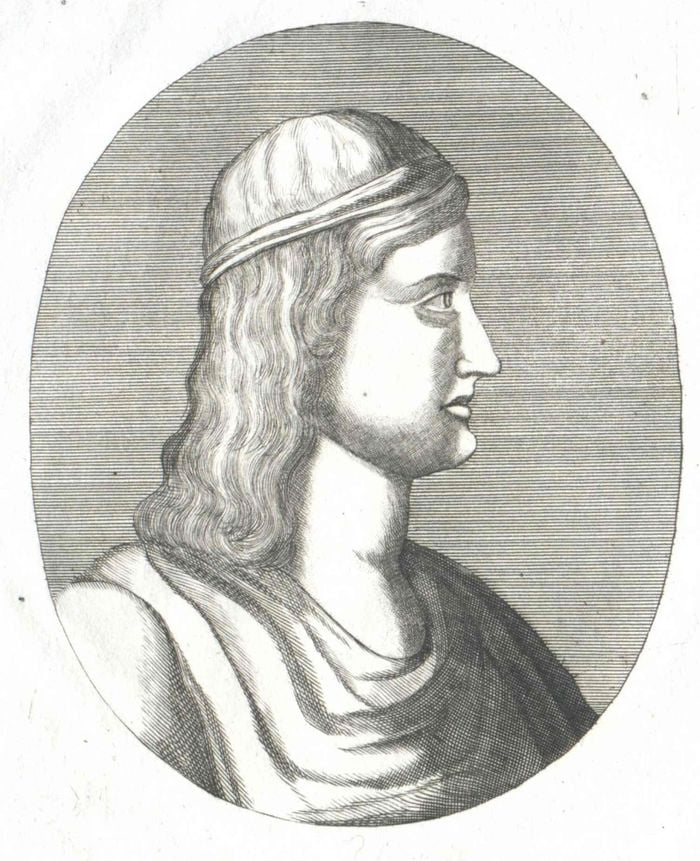
Sir Thomas Malory (Flourished Late 15th Century)

Practically nothing is known of this first great writer of English prose romance. Malory`s significance in the development of the English language is, for our purposes, not so vital a matter as his contribution to the art of story-telling. His vast compilation, which is a rewritten version of the outstanding episodes in the Arthurian cycle, was printed by Caxton in 1485, and, due to the rapid spread of books through the recently invented printing-press, Malory`s influence was far greater than it would otherwise have been. “Malory,” says Edmund Gosse, “tinges the whole English character; he is the primal fount of our passion for adventure, and of our love for active chivalry.” The present version is reprinted from Malory`s History of King Arthur and the Quest of the Holy Grail, London, 1886. There is no title in the original text.

Launcelot`s Tourney

From the Morte d`ArthurAnd then the Queen let make a privy dinner in the city of London, . unto the knights of the Round Table; and all was to show outward that she had a great joy in all other knights of the Round Table, as she had in Sir Launcelot. All only at that dinner she had Sir Gawai- ne and his brethren; that is to say, Sir Agravaine, Sir Gaheris, Sir Gareth, and Sir Mordred.Also there was Sir Bors de Ganis, Sir Blamor de Ganis, Sir Bleoberis de Ganis, Sir Galihud, Sir Galihodin, Sir Ector de Maris, Sir Lionel, Sir Palomides, and his brother, Sir Safre; la Cote mal Tail, Sir Persuant, Sir Ironside, Sir Brandiles, Sir Kaye the seneschal, Sir Mador de la Port, Sir Patrice a knight of Ireland, Sir Ali- ducke, Sir Astomore, and Sir Pinell le Savage, the which was cousin unto Sir Lamoracke de Galis, the good knight, the which Sir Gawaine and brethren slew by treason. And so these knights should dine with the Queen in a privy place by themselves; and there was made a great feast of all manner of dainty meats and drinks.But Sir Gawaine had a custom that he used daily at dinner and at supper, that he loved well all manner of fruits, and in especial apples and pears; and, therefore, whosoever dined of feasted,-Sir Gawaine would commonly purvey for good fruit for him: and so did the Queen; for, to please Sir Gawaine,` she let purvey for him of all manner of fruits.

Read More about The Book of Ruth 1

The Story of Devadatta 1

0

Somadeva (Flourished about 1070 A.D.)

Somadeva (Soma with the Brahminical suffix deva) was a poet of Kashmir. His celebrated collection, the Ocean of Streams of Stories, based upon Buddhist stories, traditions, and an earlier collection of tales, is one of the’ most voluminous and interesting of its kind in Sanskrit literature.

The present story, translated by C. H. Tawney, appeared in The Ocean of Story, Vol. I, Book IV, Chap. 21, of the complete edition in ten volumes edited by N. M. Penzer, and published in 1924—25 by Chas. J. Sawyer, Ltd., by whose permission it is here included.

The Story of Devadatta

From the Katha-Sarit-Sagara

In old time there was a certain petty monarch of the name of Jayadatta, and there was born to him a son, named Devadatta. And that wise king, wishing to marry his son, who was grown up, thus reflected: “The prosperity of kings is very unstable, being like a courtesan to be enjoyed by force; but the prosperity of merchants is like a woman of good family; it is steady and does not fly to another’man. Therefore I will take a wife to my son from a merchant`s family, in order that misfortune may not overtake his throne, though it is surrounded with many relations.” Having formed this resolve, that king sought for his son the daughter of a merchant in Pataliputra named Vasudatta. Vasudatta for his part, eager for such a distinguished alliance, gave that daughter of his to the prince, though he dwelt in a remote foreign land.

And he loaded his son-in-law with wealth to such an extent that he no longer felt much respect for his father`s magnificence. Then King Jayadatta dwelt happily with that son of his who had obtained the daughter of that rich merchant. Now one day the merchant Vasudatta came, full of desire to see his daughter, to the palace of his connection by marriage, and took away his daughter to his own home. Shortly after the King Jayadatta suddenly went to heaven, and that kingdom was seized by his relations, who rose in rebellion; through fear of them his son Devadatta was secretly taken away by his mother during the night to another country.

Then that mother, distressed in soul, said to the prince: “Our feudal lord is the emperor who rules the eastern region; repair to him, my son; he will procure you the kingdom.”

When his mother said this to him, the prince answered her: “Who will respect me if I go there without attendants?” When she heard that, his mother went on to say: “Go to the house of your father-in-law, and get money there, and so procure followers; and then repair to the emperor.” Being urged in these words by his mother, the prince, though full of shame, slowly plodded on and reached his father-in-law`s house in the evening. But he could not bear to enter at such an unseasonable hour, for he was afraid of shedding tears, being bereaved of his father and having lost his worldly splendor; besides, shame withheld him.

Read the rest of the story on link The Story of Devadatta.

Read More about Eumieus` Tale 2

The Raising of Lazarus 1

0

The Raising of Lazarus (From the New Testament, John XI)

Though this story is part of the larger narrative of the Gospel of St. John, it is a perfect example of the short story. The details that lead up to the dramatic climax are at first sight not entirely relevant. It is only after the story has been read in its entirety that we perceive the consummate art of the preparatory sentences. Balzac was, many centuries later, to apply this method to the writing of his novels.

The text is taken from the King James version. There is no title to the story in the original.

The Raising of Lazarus

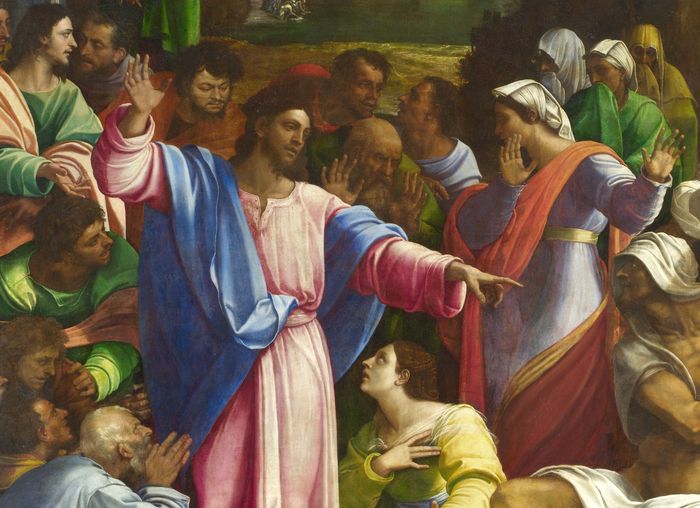
Now a certain man was sick, named Lazarus, of Bethany, the town of Mary and her sister Martha. (It was that Mary which anointed the Lord with ointment, and wiped his feet with her hair, whose brother Lazarus was sick.) Therefore, his sister sent unto him saying, Lord, behold, he whom thou lovest is sick. When Jesus heard that, he said, This sickness is not unto death, but for the glory of God, that the Son of God might be glorified thereby.

Now Jesus loved Martha, and her sister, and Lazarus. When he had heard therefore that he was sick, he abode two days still in the same place where he was. Then after that saith he to his disciples, Let us go into Judaea again. His disciples say unto him, Master, the Jews of late sought to stone thee; and goest thou thither again? Jesus answered, Are there not twelve hours in the day? If any man walk in the day, he stumbleth not, because he seeth the light of this world. But if a man walk in the night, he stumbleth, because there is no light in him. These things said he: and after that he saith unto them, Our friend Lazarus sleepeth; but I go, that I may awake him out of sleep. Then said his disciples, Lord, if he sleep, he shall do well. Howbeit Jesus spake of his death: but they thought that he had spoken of taking of rest in sleep. 1 hen Jesus said unto them plainly, Lazarus is dead.

And I am glad for your sakes that I was not there, to the intent ye may believe: never-theless let us go unto him. Then said Thomas, which is called Didymus, unto his fellow disciples, Let us also go, that we may die with him Then when Jesus came, he found that he had lain in the grave four days already. Now Bethany was nigh unto Jerusalem about fifteen furlongs off: and many of the Jews came unto Martha, and Mary, to comfort them concerning their brother. Then Martha, as soon as she heard that Jesus was coming, went and met him, but Mary sat still in the house. Then said Martha unto Jesus, Lord, if thou hadst been here, my brother had not died. But I know, that even now, whatsoever thou wilt ask of God, God will give it thee. Jesus saith unto her, Thy brother shall rise again. Martha saith unto him, I know that he shall rise again me resurrection at the last day. Jesus said unto her, I am the resurrection and the life: he that believeth in me, though he were dead, yet shall he live: and whosoever liveth and believeth in me shall never die. Believest thou this? She saith unto him, Yea, Lord; I believe that thou art the Christ, the son of God, which should come into the world. And when she had so said, she went her way, and called Mary her sister secretly, saying, The Master is come, and calleth for thee. As soon as she heard that, she arose quickly and came unto him.

For the rest of the story you can visit link The Raising of Lazarus.

Read More about Maese Pfirez the Organist part 3

The Jewish Mother 2

0

The literature of the New Testament (which was written in late Greek) is difficult to classify. It is Jewish, of course, but permeated by a distinctly non-Hebraic spirit. The influence exerted by the narratives of the New Testament has been enormous, but it is rather religious and theological than artistic. The spirit of this literature has penetrated the thought, life, habits and art of the entire Occidental world.

The Jewish Mother

From The Talmud

0nce upon a time a Jewish mother together with her seven sons suffered martyrdom at the hands of the Emperor. The sons ordered by the latter to do homage to the Imperial idols, declined, and justified their disobedience by each quoting a simple text from the Scriptures. When the seventh was brought forth, it is said that Osar for appearance sake, offered to spare him if he would only stoop and pick up a ring from the ground which had been dropped on purpose.

Aias for thee oh, Caesar!” replied the boy; “if thou art so zealous for thine honor how much more so ought we to be for that of the Holy One— blessed be He!” When he was led away to the place of execution, his mother begged and obtained leave to give him a last kiss.

For, my child, she said, “and say to Abraham, Thou didst build an altar, for the sacrifice of one son, but I have raised altars for seven sons, then she turned away and threw herself headlong from the roof and died. The echo of a voice was heard exclaiming, “The joyful mother of children.”

The whole text can be seen on link The Jewish Mother.

Read More about Rabbi Akiva 1

The History of Susanna 2

0

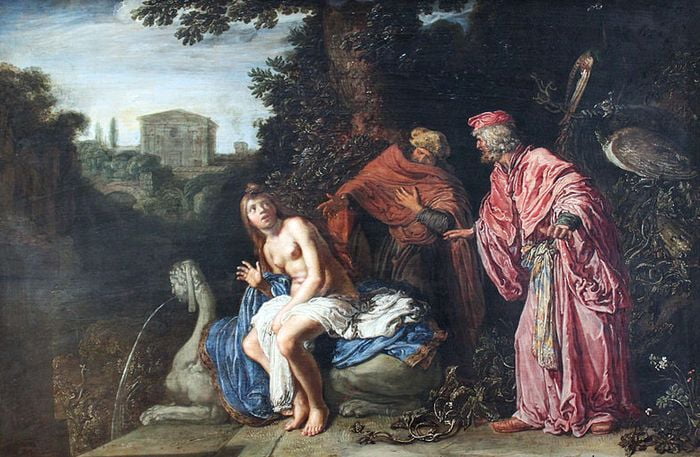
And the elders said:—“As we walked in the garden alone, this woman came in with two maids, and shut the garden doors, and sent the maids away. Then a young man, who there was hid, came unto her, and lay with her. Then we that stood in a corner of the garden, seeing this wickedness, ran unto them. And when we saw them together, the man we could not hold: for he was stronger than we, and opened the door, and leaped out. But having taken this woman, we asked who the young man was, but she would not tell us: these things do we testify.”

Then the assembly believed them, as those that were the elders, and judges of the people: so they condemned her to death. Then Susanna cried.out with a loud voice, and said:—“O everlasting God, that knowest the secrets, and knowest all things before they be: Thou knowest that they have borne false witness against me, and, behold, I must die; whereas I never did such things as these men have maliciously invented against me.” And the Lord heard her voice. Therefore when she was led to be put to death, the Lord raised up the holy spirit of a youth, whose name was Daniel: who cried with a loud voice:— “I am clear from the blood of this woman.” Then all the people turned them toward him, and said:—“What mean these words that thou hast spoken?”

False witness

So he standing in the midst of them said:—“Are ye such fools, ye sons of Israel, that without examination or knowledge of the truth ye have condemned a daughter of Israel? Return again to the place of judgment: for they have borne false witness against her.” Wherefore all the people turned again in haste, and the elders said unto him:— “Come, sit down among us, and shew it us, seeing God hath given thee the honor of an elder.” Then said Daniel unto them:—“Put these two aside one far from another, and I will examine them.”

So when they were put asunder one from another, he called one of them, and said unto him:—“O thou that art waxen old in wickedness, now thy sins which thou hast committed aforetime are come to light: for thou hast pronounced false judgment, and hast condemned the innocent, and hast let the guilty go free; albeit the Lord saith, The innocent and righteous shalt thou not slay. Now then, if thou hast seen her, tell me, Under what tree sawest thou them companying together?” Who answered:—“Under a mastic tree.” And Daniel said:—“Very well; thou hast lied against thine own head; for even now the angel of God hath received the sentence of God to cut thee in two.”

So he put him aside, and commanded to bring the other, and said unto him:—“O thou seed of Canaan, and not of Juda, beauty hath deceived thee, and lust hath perverted thine heart. Thus have ye dealt with the daughters of Israel, and they for fear companied with you: but the daughter of Juda would not abide your wickedness. Now therefore tell me, Under what tree didst thou take them companying together?” Who answered:—“Under an holm tree.” Then said Daniel unto him:—“Well; thou hast also lied against thine own head: for the angel of God waiteth with the sword to cut thee in two, that He may destroy you.” With that all the assembly cried out with a loud voice, and praised God, who saveth them that trust in Him.

And they arose against the two elders, for Daniel had convicted them of false witness by their own mouth: and according to the law of Moses they did unto them in such sort as they maliciously intended to do to their neighbor: and they put them to death. Thus the innocent blood was saved the same day. Therefore Chelcias and his wife praised God for their daughter Susanna, with Joakim her husband, and all the kindred, because there was no dishonesty found in her.

From that day forth was Daniel had in great reputation in the sight of the people.

Whole story can be read on link The History of Susanna.

Read More about Doctor Faust and the Usurer part 1

The Dream 2

0

Howbeit the ways were unknown to me: and thereupon I took up my packet, unlocked and unbarred the doors, but those good and faithful doors, which in the night did open of their own accord, could then scantly be opened with their keys. And when I was out I cried, “O sirrah hostler, where art thou? Open the stable-door, for I will ride away by and by.” The hostler lying behind the stable-door upon a pallet and half asleep, “What (quoth he), do you not know that the ways be very dangerous? what mean you to rise at this time of night? If you, perhaps guilty of some heinous crime, be weary of your life, yet think you not that we are such sots that we will die for you.” Then said I, “It is wellnigh day, and moreover, what can thieves take from him that hath nothing? Dost thou not know, fool as thou art, if thou be naked, if ten giants should assail thee, they could not spoil`or rob thee?” Whereunto the drowsy hostler, half asleep and turning on the other side, answered, “What know I whether you have murdered your companion whom you brought in yesternight or no, and now seek the means to escape away?” O Lord, at that time, I remember, the earth seemed to open, and methought I saw at hell gate the dog.

Cerberus ready to devour me; and then I verily believed that Meroe did not spare my throat moved with pity, but rather cruelly pardoned me to bring me to the gallows. Wherefore I returned to my chamber, and there devised with myself in what sort I should finish my life. And therewithal I pulled out a piece of rope wherewith the bed was corded, and tied one end thereof about a rafter by the window, and with the other end I made a sliding knot, and stood upon my bed, and so put my neck into it, and when I leaped from the bed thinking verily to strangle myself and so die, behold the rope, being old and rotten, burst in the middle, and I fell down tumbling upon Socrates that lay under: and even at that same very time the hostler came in crying with a loud voice and said,

“Where are you that made such haste at midnight, and now lies wallowing abed?” Whereupon (I know not whether it was by my fall, or by the great cry of the hostler) Socrates as waking out of a sleep, did rise up first and said, “It is not without cause that strangers do speak evil of all such hostlers, for this caitiff in his coming in, and with his crying out, I think under a color to steal away something, has waked me out of a sound sleep.` Then I rose up, joyful with a merry countenance, saying, “Behold, good hostler, my friend, my companion and my brother whom thou didst falsely affirm to be slain by me this night.” And therewithal I embraced my friend Socrates and kissed him, and took him by the hand and said, “Why tarry we? Why lose we the pleasure of this fair morning? let us go”: and so I took up my packet, and paid the charges of the house and departed.

And we had not gone a mile out of the town but it was broad day, and then I diligently looked upon Socrates` throat to see if I could espy the place where Meroe thrust in her sword; but when I could not perceive any such thing, I thought with myself, What a madman am I, that being overcome with wine yesternight have dreamed such terrible things! behold, I see Socrates is sound, safe and in health. Where is his wound? where is the sponge? where is his great and new cut? And then I spake to him and said, “Verily it is not without occasion that physicians of experience do affirm, that such as fill their gorges abundantly with meat and drink shall dream of dire and horrible sights: for I myself, not tempering my appetite yesternight from pots of wine, did seem to see this night strange and cruel visions, that even yet I think myself sprinkled and wet with human blood. Whereunto Socrates laughing made answer, “Nay, verily, I myself dreamed this night that my throat was cut, and that I felt the pain of the wound, and that my heart was pulled out of my belly, and the remembrance thereof makes me now to fear, for my knees do so tremble that I can scarce go any further; and therefore I would fain eat somewhat to strengthen and revive my spirits.”

Then said I, “Behold here thy breakfast ; and therewithal I opened my scrip that hanged upon my shoulder, and gave him bread and cheese, and we sat down under a great plane tree, and I ate part with him. And while I beheld him eating greedily, I perceived that he waxed meager and pale, and that his lively color faded away, insomuch that being in great fear, and remembering those terrible furies of whom I lately dreamed, the first morsel of bread that I put in my mouth (which was but very small) did so stick in my jaws, that I could neither swallow it down, nor yet yield it up, and moreover the small time of our being together increased my fear: and what is he that seeing his companion die in the highway before his face, would not greatly lament and be sorry?

But when that Socrates had eaten sufficiently, he waxed very thirsty, for indeed he had well- nigh devoured all a whole cheese: and behold evil fortune! there was behind the plane tree a pleasant running water as clear as crystal, and I said unto him, “Come hither, Socrates, to this water and drink thy fill.” And then he rose and came to the river, and kneeled down upon the side of the bank to drink; but he had scarce touched the water with his lips, whenas behold the wound of his throat opened wide, and the sponge suddenly fell into the water, and after issued out a little remnant of blood, and his body being then without life, had fallen into the river, had I not caught him by the leg and so pulled him up. And after that I had lamented a good space the death of my wretched companion, I buried him in the sands there by the river.

The whole text can be seen on link The Dream.

Read More about The District Doctor part 2

The Book of Ruth 1

0

The Book of Ruth (From the Old Testament)

Into the extremely complicated questions of authorship, origin and development of the Old Testament it is not necessary to enter. Ruth is one of the most beautifully conceived and finely written narratives of all Biblical literature. Although it has its place in the ethical scheme of the Old Testament, it seems to have been written with an artistic zest and freedom from constraint that are rare in the religious literature of any race.

The text used here is that printed in Volume IV of Ancient Hebrew Literature, in Everyman`s Library, published in 1907 by J. M. Dent and Sons, by whose permission it is here included. (The last sentence has been omitted, as it has nothing to do with the story.)

The Book of Ruth

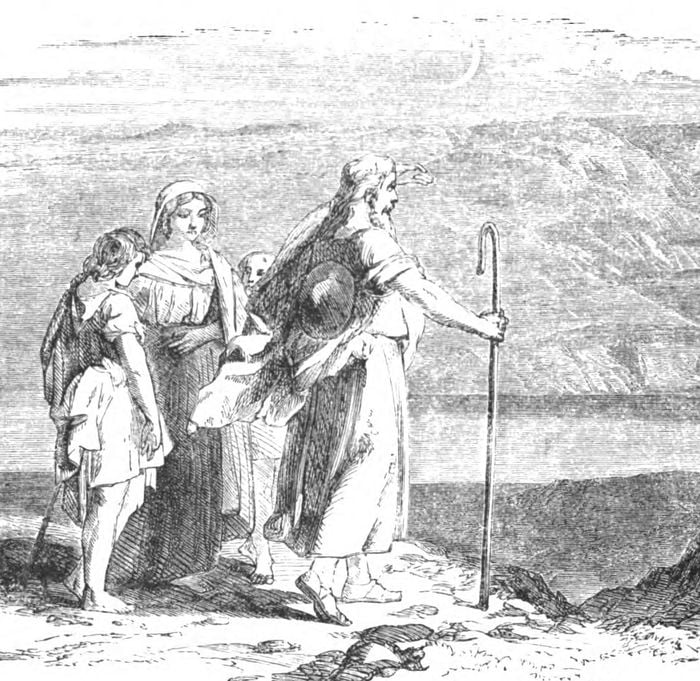
Now it came to pass in the days when the judges ruled, that there was a famine in the land. And a certain man of Beth-lehem- judah went to sojourn in the country of Moab, he, and his wife, and his two sons. And the name of the man was Elimelech, and the name of his wife Naomi, and the name of his two sons Mahlon and Chilion, Ephra- thites of Beth-lehem-judah. And they came into the country of Moab, and continued there.

And Elimelech Naomi`s husband died; and she was left, and her two sons. And they took them wives of the women of Moab; the name of the one was Orpah, and the name of the other Ruth: and they dwelled there about ten years. And Mahlon and Chilion died also both of them; and the woman was left of her two sons and her husband.

Then she arose with her daughters-in-law, that she might return from the country of Moab: for she had heard in the country of Moab how that the Lord had visited His people in giving them bread. Wherefore she went forth out of the place where she was, and her two daughters-in-law with her; and they went on the way to return unto the land of Judah. And Naomi said unto her two daughters-in-law:— “Go, return each to her mother`s house: the Lord deal kindly with you, as ye have dealt with the dead, and with me. The Lord grant you that ye may find rest, each of you in the house of her husband.” Then she kissed them; and they lifted up their voice, and wept. And they said unto her:—“Surely we will return with thee unto thy people.”

And Naomi said:—“Turn again, my daughters: why will ye go with me? are there yet any more sons in my womb, that they may be your husbands? Turn again, my daughters, go your way; for I am too old to have an husband. If I should say, I have hope, if I should have an husband also to-night, and should also bear sons; would ye tarry for them till they were grown? would ye stay for them from having hus-bands? nay, my daughters; for it grieved me much for your sakes that the hand of the Lord is gone out against me.”

And they lifted up their voice, and wept again: and Orpah kissed her mother-in-law; but Ruth clave unto her. And she said:—“Behold, thy sister-in-law is gone back unto her people, and unto her gods: return thou after thy sister-in-law.” And Ruth said:—“Intreat me not to leave thee, or to return from following after thee: for whither thou goest, I will go; and where thou lodgest, I will lodge: thy people shall be my people, and thy God my God: where thou diest, will I die, and there will I be buried: the Lord do so to me, and more also, if ought but death part thee and me.”

Beth-lehem

When she saw that she was steadfastly minded to go with her, then she left speaking unto her. So they two went until they came to Beth-lehem. And it came to pass, when they were come to Beth-lehem, that all the city was moved about them, and they said:—“Is this Naomi?” And she said unto them:—“Call me not Naomi, call me Mara: for the Almighty hath dealt very bitterly with me. I went out full, and the Lord hath brought me home again empty: why then call ye me Naomi, seeing the Lord hath testified against me, and the Almighty hath afflicted me?”

So Naomi returned, and Ruth the Moabitess, her daughter-in-law, with her, which returned out of the country of Moab: and they came to Beth-lehem in the beginning of barley harvest. And Naomi had a kins-man of her husband`s, a mighty man of wealth, of the family of Eli- melech; and his name was Boaz. And Ruth the Moabitess said unto Naomi:—“Let me now go to the field, and glean ears of corn after him in whose sight I shall find grace.” And she said unto her:—“Go, my daughter.” And she went, and came, and gleaned in the field after the reapers: and her hap was to light on a part of the field belonging unto Boaz, who was of the kindred of Elimelech.

And, behold, Boaz came from Beth-lehem, and said unto the reapers: —“The Lord be with you.” And they answered him’:—“The Lord bless thee.” Then said Boaz unto his servant that was set over the reapers: —“Whose damsel is this?” And the servant that was set over the reapers answered add said:—“It is the Moabitish damsel that came back with Naomi out of the country of Moab: and she said, I pray you, let me glean and gather after the reapers among the sheaves: so she came, and hath continued even from the morning until now, that she tarried a little in the house.” Then said Boaz unto Ruth:—“Hearest thou not, my daughter?

Go not to glean in another field, neither go from hence, but abide here fast by my maidens: let thine eyes be on the field that they do reap, and go thou after them: have I not charged the young men that they shall not touch thee? and when thou art athirst, go unto the vessels, and drink of that which the young men have drawn.” Then she fell on her face, and bowed herself to the ground, and said u ti to him: —“Why have I found grace in thine eyes, that thou shouldest take knowledge of me, seeing I am a stranger?” And Boaz answered and said unto her:—“It hath fully been shewed me, all that thou hast done unto thy mother-in-law since the death of thine husband: and how thou hast left thy father and thy mother, and the land of thy nativity, and art come unto a people which thou knewest not heretofore. The Lord recompense thy work, and a full reward be given thee of the Lord God of Israel, under whose wings thou art come to trust.”

Handmaidens

Then she said:—“Let me find favor in thy sight, my lord; for that thou hast comforted me, and for that thou has spoken friendly unto thine handmaid, though I be not like unto one of thine handmaidens.” And Boaz said unto her:—“At mealtime come thou hither, and eat of the bread, and dip thy morsel in the vinegar.” And she sat beside the reapers: and he reached her parched corn, and she did eat, and was sufficed, and left. And when she was risen up to glean, Boaz commanded his young men, saying:—“Let her glean even among the sheaves, and reproach her not: and let fall also some of the handfuls of purpose for her, and leave them, that she may glean them, and rebuke her not.”

So she gleaned in the field until even, and beat out that she had gleaned: and it was about an ephah of barley. And she took it up, and went into the city: and her mother-in-law saw what she had gleaned: and she brought forth, and gave to her that she had reserved after she was sufficed. And her mother-in-law said unto her:—“Where hast thou gleaned to-day? and where wroughtest thou? blessed be he that did take knowledge of thee.” And she shewed her mother-in-law with whom she had wrought, and said:—“The man`s name with whom I wrought to-day is Boaz.” And Naomi said unto her daughter-in-law: -“Blessed be he of the Lord, who hath not left off His kindness to the living and to the dead.” And Naomi said unto her:—“The man is near of kin unto us, one of our next; kinsmen.” And Ruth the Moabitess said:

“He said unto me also, Thou shah keep fast by my young men, until they have ended all my harvest.” And Naomi said unto Ruth her daughter-in-law: “It is good, my daughter, that thou go out with his maidens, that they meet thee not in any other field.” So she kept fast by the maidens of Boaz to glean unto the end of barley harvest and of wheat harvest; and dwelt with her mother-in-law.

The above text has been copied from www.doholidays.com; For the rest of the story you can visit link The Book of Ruth.

Read More about Eumieus` Tale 2

Rabbi Akiva 1

0

The Talmud is a great collection of law, ritual, precept, and example, which was composed during the period extending from the First Century B.C. to the Fourth Century A.D. The work was the result of a vast amount of compilation begun, so far as the actual writing is concerned, in the year 219 A.D. by Rabbi Jehudah Hanassi. About the year 500 A.D. it was complete, having been combined with a good deal of material brought together since the first parts were written down. The colossal work is interspersed throughout with parables, like Rabbi Akiva and The Jewish Mother, all of which were used for purposes of illustration.
The texts of these stories are based, by the editors, upon two early translations. There are no titles to the stories in the original.

Rabbi Akiva

The Rabbis tell us that once the Roman Government made a decree forbidding Israel to study the law. Thereupon Pappus, son of Yehudah, one day found Rabbi Akiva teaching it openly to many whom he had gathered round him to hear it. “Akiva,” he said, “dost not thou fear the Government?” “Listen, was the reply, and I will tell thee how it is through a parable. It is the same with me as with the fishes which a fox, walking by a river s bank, saw darting distractedly to and fro in the stream; and, speaking to them, inquired, `From what, pray, are ye fleeing?` `From the nets,` they answered, `which the sons of men have set to snare us. Why, then, rejoined the fox, `not try the dry land with me, where we can live together, as our fathers managed to live before us?`

`Surely,` they exclaimed, thou art not he of whom we have heard as the most cunning of animals; for in this thing thou art not wise, but foolish. For if we have cause to fear where it is natural for us to live, how much more reason have we to do so where we must die!` Exactly so,” continued Akiva, “is it with us who study the law, in which it is written, `He is thy life and the length of thy days; for if we suffer while studying the law, how much more shah we suffer if we neglect it?”

The story has been taken from www.ensartourguide.com. Whole story can be read on link Rabbi Akiva.

Read More about The Friar of Novara part 3

Horatius at the Bridge 1

0

Ancient Rome

It is a commonplace of literary history that Roman art was largely imitated or derived from the Greek, and in particular that Roman literature contributed little to the world`s store of masterpieces. Yet among the Romans the short story was esteemed more highly and was often more skillfully developed than it was among the Greeks.

The first of the stories chosen is from the historian Livy. Before his day there is very little material from which to select, although if the earlier writers of epic and history were better known to us, we might have found stories in the works of Livius Andronicus, Ennius, and the historians, most of whose writings have been lost. In the Letters of Cicero are numerous incidents falling within our category, but none of them of sufficient intrinsic interest to warrant their inclusion in this volume. Livy`s History abounds in episodes, many of them related with a certain matter-of-factness that characterizes a great deal of Latin prose writing. Still, Horatius at the Bridge is a stirring tale rendered doubly effective by its simplicity.

Ovid was a born teller of stories, and though he borrowed largely from the Greeks and was a fastidious poet intent upon achieving a refined and elegant style, the numerous myths which he treats at length in his Metamorphoses include half a dozen of the loveliest stories ever written.
Other poets and historians and miscellaneous writers—Valerius Maximus, Varro, Statius, Tacitus and Suetonius—tried their hand at story-telling, and even Vergil in his JEneid recounted episodes that are genuine stories, but none of them could rival the technical skill with which the minor poet Phaedrus turned the ffssopian fables and everyday incidents of life and history into graceful and appealing tales. Like the earlier fabulists, Phaedrus preached litde sermons. The most interesting parts of his work are the little anecdotes, like the one included in this volume; these are miniature stories. The other famous Roman fabulist was Avianus who, rediscovered in the Middle Ages, exerted a profound and lasting influence in France and Germany. But his work is neither so finished nor so attractive as that of Phaedrus.

Many genuine stories are found in the personal correspondence of the time, chiefly among the published collections of Cicero and Pliny the Younger. Pliny wrote several short stories which he elaborated with conscious skill, for he wrote with a view to publication. Throughout all modern literature we find stories, indeed lengthy stories (see Richardson), related through the medium of letters. This is a deliberate device employed to lend to the narrative an air of actuality. It would be enlightening to know whether Pliny wrote his Haunted House as a literary experiment, or whether he really believed the story. But supposing he related it as a fact—supposing even that all the facts were to be proved scientifically correct, would it be any the less a good story?
Matron of Ephesus

Petronius belonged to a different world in which Latin prose had lost a good deal of its rigid dignity, and like the literature of the late Hellenistic period in Greece, was characterized by a facile cynicism on the part of the writers, and an over-luxuriance of style. The writers were very numerous, poets, historians, satirists, and even scientists interspersing their writings with tales of haunted houses, ghosts, and all the supernatural apparitions that are the stock-in-trade of the story- writer. Petronius and Apuleius, however, stood head and shoulders above the rest of their contemporaries and followers. The Matron of Ephesus, hackneyed though its theme may be, is a masterpiece of satirical fiction, while The Dream is one of a dozen tales of mystery and imagination which constitute the chief glory of The Golden Ass. That rambling romance, it will be remembered, also contains the enchanting Cupid and Psyche, which is far too long for inclusion in a collection of this sort.

Just at what point Roman literature ended is a matter to be determined by the historians, but after the Fifth Century A.D. it becomes increasingly difficult to designate any tale as unmistakably Roman.

Then foreigners began to change the face of the Empire, Christianity damped the ardour of the artist and stifled the imagination of the storyteller. It is not until the dawn of modern times, some six or seven centuries afterward, when the fragments of Roman stories were again taken up and imbedded in the curious mediaeval mosaics of the Gesta Romanorum and the Hundred Ancient Tales, that we realize that the art of tale-telling had never been forgotten.

Throughout the break-up of Rome and the barbarian invasions, through the darkest years of the Tenth Century, the Latin traditions were preserved in the manuscripts of the monasteries, and on the lips of singers, minstrels, acrobats, and actors.

With Apuleius and Petronius the short story, as a literary-form, achieved a decided technical advance over the efforts of the Greeks. With these later writers the story was told largely for its own sake, and not to illustrate a moral truth or glorify the deeds of the Roman people.

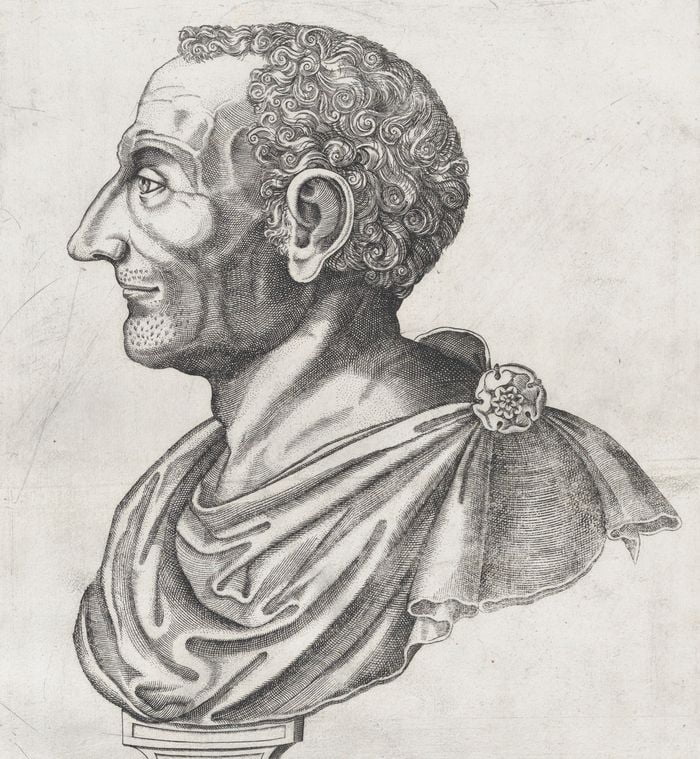
Livy (59 B.C.-I7 A.D.)

Titus Livius, known to us under the English title of Livy, though born in the provinces at Padua, spent most of his life at the capital, where he was a teacher and writer of history. His History of Rome was a monumental work, of which only a part has come down to us. Like practically all the historians of antiquity (and most of the modems, for that matter) he introduces stories and anecdotes on hearsay evidence, using them in order to glorify his country or to drive home a lesson. Horatius at the Bridge is a case in question, and though it may be founded on fact, it is probably apocryphal in detail.

The present translation (including Chapters IX and X of Book II) is a revision of that made by D. Spillan, published in the Bohn edition in 1872. There is no title in the original.

The above text has been copied from docappadocia.com; For the rest of the story you can visit link Horatius at the Bridge.

Read More about Taste of Balkan Tour